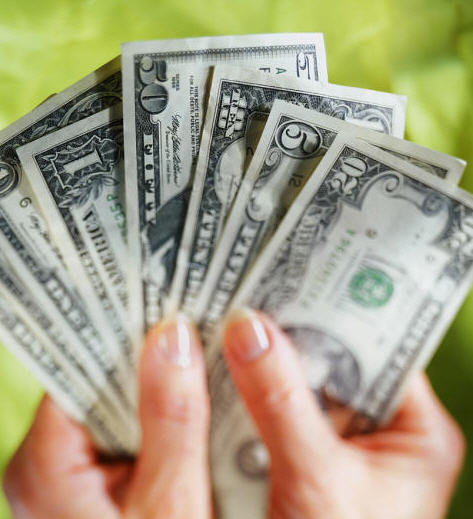
Something’s going on with the US dollar and it’s not good — it’s worrisome.
My first clue was when it was reported:
This week, in an unusual move, the Bush administration is sending virtually the entire economic “A-team” to visit China for a “strategic economic dialogue” in Beijing Dec. 14 and 15.
Treasury Secretary Henry Paulson and Federal Reserve Chairman Ben Bernanke are leading the delegation, along with five other cabinet-level officials, including Secretary of Commerce Carlos Gutierrez. Also in the delegation will be Labor Secretary Elaine Chao, Health and Human Services Secretary Mike Leavitt, Energy Secretary Sam Bodman, and U.S. Trade Representative Susan Schwab.
Also:
China today now is holding a historically unprecedented $1 trillion in foreign exchange reserves. During the Thanksgiving holiday, an announcement by China that their central bank planned to diversify foreign-exchange holding away from the dollar caused the dollar to drop in value on international currency markets. Since then, the dollar has hit a 20-month low against the euro.
The Euro is stronger. What will happen when the first Chinese bank embraces the Euro and drops the dollar?
Moreover, how can this be?
The Drudge Report features a headline this hour reading: HOLIDAY HIGH, DOW SURPASSES 12,400:
NEW YORK (Reuters) – U.S. stocks climbed on Thursday, boosted by surprisingly high earnings from investment bank Bear Stearns Co. Inc. and economists’ bullish estimates for stock indexes performance next year.
CNN Money reports today:
Investors also considered a report that showed a surprisingly large drop in the number of Americans filing new claims for unemployment last week.
Also a factor: the possibility of the Democrats losing control of the Senate amid news that a senator from South Dakota was in critical condition after suffering a brain hemorrhage. (Full story)
U.S. light crude oil for January delivery gained $1.14 to $62.51 a barrel on the New York Mercantile Exchange after OPEC said it would cut production by 500,000 barrels per day starting Feb. 1.
Treasury prices fell, with the yield on the benchmark 10-year note rising to 4.60 percent from 4.58 percent late Wednesday. Bond prices and yields move in opposite
directions. In currency trading, the dollar rose against the yen and euro.COMEX February gold slipped $1.50 to settle at $630.90 an ounce.
Even the White House is saying: “USA Today/Gallup Poll Estimated Consumers Plan To Spend More Than $800 On Gifts This Season. The estimate is the “highest early November reading Gallup has seen since 2000,” suggesting a “strong holiday season” for retailers.
But John Williams, author of The Shadow Government Statistics blog believes:
There will be a central bank, most probably in Asia, who will start the move away from the dollar and when it happens, you’re going to see other central bankers covertly trying to follow. The move will magnify very quickly and it could become a full-fledged panic and a dollar collapse.”
The Fed is struggling right now to contain inflation and stimulate economic growth. All the Fed is doing right now with all their grand policy shifts is using a lot of propaganda and market massaging to try to prevent a financial panic.”
Jerome Corsi of the WorldNetDaily writes:
A report scheduled to be released by the Treasury Department tomorrow is expected to show the true deficit in the Bush administration’s 2006 federal budget to be an astounding $3.5 trillion in the red, not $248.2 billion as previously reported.
The United States is bankrupt,” Williams insisted. “With less than one-tenth of the actual deficit being reported each year, a cumulative negative net worth exceeding $50 trillion has built up in stealth to where the total obligations of the U.S. government are now more than four times our annual gross domestic product.
Indeed the unfolding fiscal nightmare likely will entail a U.S. hyperinflation and a resulting collapse in the value of the world’s primary reserve currency, the dollar. When this starts to unravel it will unravel fast. I don’t know whether it will be the dominant issue in the 2008 presidential election, but I believe it will be by 2012.”
Are our “giveaway” federal fiscal policies finally, finally beginning to catch up with us? And will the government and the media be complicit in hiding this information from citizens?
You realize, of course, that’s how the USSR was defeated: the US simply outspent the USSR defensively, to the point where we bankrupted the entire union.
So, despite a record DOW and unemployment claims trending down, WHY are Treasury Secretary Henry Paulson, Federal Reserve Chairman Ben Bernanke, Secretary of Commerce Carlos Gutierrez, Labor Secretary Elaine Chao, Health and Human Services Secretary Mike Leavitt, Energy Secretary Sam Bodman and U.S. Trade Representative Susan Schwab on a junket to Beijing today and tomorrow?
The new dialogue was announced in September during a trip to Beijing by Paulson, who hailed the forum as a way of tackling the longer-term challenges to the world economy thrown up by China’s headlong growth.
But speaking in London earlier Tuesday, Paulson acknowledged that “the need for greater currency flexibility” on the Chinese yuan was a short-term headache facing US-China relations. The United States and other nations argue the yuan is made artificially weak, giving the Asian giant an unfair advantage in global trade.
The US trade deficit with China in September reached a record 23 billion dollars, one-third of the total US trade gap.
Paulson, addressing the Confederation of British Industry’s annual conference, said US relations with China had suffered from “a fair amount of tension” over perceptions that their bilateral trade is unfairly skewed.
I detect an even greater amount of concern than publically portrayed. Any economists out there with thoughts?
BZ