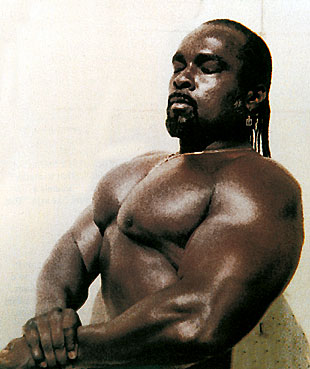
At around 1 PM yesterday, Governor Arnold Schwarzenegger made public his decision regarding 51-year-old Stanley “Tookie” Williams: there would be no clemency.
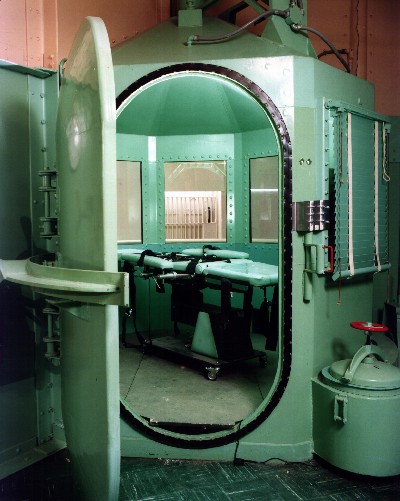
At one minute after midnight, Williams was given the injection. He did not request a “last meal” nor did he have any “final words.” He was declared dead at 12:35 AM as nurses had trouble locating an appropriate vein in Williams’ arm due to his hypertrophic condition. The difficulty was with the second IV in his left arm. Williams asked: “You doing that right?”
At 12:35 they did it right.
Predicted rioting did not occur indicating that, finally, the ’70s are indeed dead along with Mr. W.
Governor Schwarzenegger issued a five-page Statement of Decision (click here for full text) regarding his denial of clemency. The governor wrote:
In all, Williams’ case has been the subject of at least eight substantive judicial opinions.2 Prior to the filing of the clemency petition, the state court habeas process was completed on June 21, 1995 when the California Supreme Court denied Williams’ fourth state habeas corpus petition.3 The federal court habeas process was completed on October 11, 2005 when the United States Supreme Court denied Williams’ writ of certiorari.
This is the governor saying: his case has been vetted to the Nth degree.
The claim that Williams received an unfair trial was the subject of this extensive litigation in the state and federal courts. The courts considered the sufficiency of his counsel, the strategic nature of counsel’s decisions during the penalty phase of Williams’ trial, the adequacy and reliability of testimony from informants, whether Williams was prejudiced by security measures employed during his trial, whether he was competent to stand trial, whether the prosecutor impermissibly challenged potential jurors on the basis of race, and whether his jury was improperly influenced by Williams’ threats made against them.
There is no need to rehash or second guess the myriad findings of the courts over 24 years of litigation. The possible irregularities in Williams’ trial have been thoroughly and carefully reviewed by the courts, and there is no reason to disturb the judicial decisions that uphold the jury’s findings that he is guilty of these four murders and should pay with his life.
The governor’s statement then hit the proverbial nail on the proverbial head:
The basis of Williams’ clemency request is not innocence. Rather, the basis of the request is the “personal redemption Stanley Williams has experienced and the positive impact of the message he sends.”4 But Williams’ claim of innocence remains a key factor to evaluating his claim of personal redemption. It is impossible to separate Williams’ claim of innocence from his claim of redemption.
The statement concludes:
Clemency decisions are always difficult. But the constitutional power of the Governor to grant clemency does not stand in isolation. It must be balanced with the Governor’s constitutional duty to see that the laws are faithfully executed. Here, Williams is clearly guilty, and the evidence and clemency materials supporting Williams’ claim of personal redemption are equivocal.
Therefore, based on the totality of circumstances in this case, Williams’ request for
clemency is denied.DATED: December 12, 2005
Signed: ARNOLD SCHWARZENEGGER_____________________________________
And that’s enough on this.