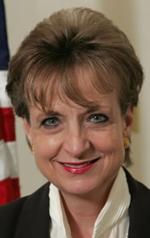
This post displays the COMPLETE text of Gov. Schwarzenegger’s address on January 5th. What is there NOT to like about this guy?
Governor Schwarzenegger’s State of the State Address, Wednesday, 01/05/2005, 5:00 pm:
Thank you, Lieutenant Governor Bustamante, President Pro Tem Perata, Speaker Nuñez, Senate Republican Leader Ackerman, Assembly Republican Leader McCarthy, my fellow representatives of the people. Once again I am honored to stand in this chamber.
Right off I want to say, Maria, thank you for all you’ve done for me, for our family and for California over this past year. All of us in elective office know the sacrifices our families must make, and so I also want to acknowledge the sacrifices and contributions of your families. I want you and them to know that our state is grateful.
My friends, I look forward to working with you on the people’s business. We have a lot to do, and I believe we can do it.
In these State of the State speeches, governors often begin by listing their accomplishments of the past year. I will do the same.
The year before I took office as governor, California had 300 days of sunshine. Last year, under my administration, we had 312 days of sunshine. That’s what true leadership is all about.
In all seriousness, this last year we faced some dark days. The shadow of 22 billion dollars in inherited debt loomed over us. The great state of California, the sixth largest economy in the world, the symbol of the American dream, faced economic ruin.
The most important thing we did last year–we grabbed California by the collar just before it slipped into a financial black hole. We slowed the growth in spending, renegotiated contracts, secured more than a billion dollars in new federal financial support. We should feel good about what we accomplished together.
Yet the greatest rescuers of the state are not those of us in this room, but the people of California. They are the ones who passed Prop 57, which issued the bonds to prevent the state’s collapse. They are the ones who passed Prop 58, which prevents the state from borrowing money to cover future deficits. I want to thank my fellow Californians for their confidence that together we can turn this government and its finances around.
The people saved the state from bankruptcy, but they were very clear about one thing. They said, “We will do this once to clean up the past, but do not let it happen again.”
Last year we stopped the bleeding. This year we must heal the patient.
To continue California’s recovery, this year we must do two things.
To solve the budget’s continuing structural deficit, we must reform the way the government spends its money. And to restore the trust of the people, we must reform the way the government operates.
My friends, this is a time for choosing.
Will California have a government that encourages the dreams of the people?
Or will the decline of recent years accelerate and further destroy the people’s faith in their government? We must not let that happen.
I get up every morning wanting to fix things here in Sacramento. I ask you today: Help me fix them.
Last year, we worked together to avert a crisis. This year we must address its causes.
Tomorrow, I will convene a special session to address the financial, educational and governmental reforms that civic responsibility demands.
In this special session, I ask you to work with me on four reforms.
The first relates to the financial situation that we face.
I’m going to tell you something that you know in your hearts to be true.
In every meeting I attend in Sacramento, there’s an elephant in the room. In public, we often act like it’s not there. But, in private, you come up to me–Republican and Democrat alike–and you tell me the same thing, “Arnold, if only we could change the budget system. But the politics are just too dangerous.”
The elephant in the room is a budget system that has removed our ability to make the best decisions for California. It has taken away the freedom and the responsibility of legislating. We can change that.
My colleagues, I say to you, political courage is not political suicide. Ignore the lobbyists. Ignore the politics. Trust the people.
Last year, we had $78 billion in revenues coming in. The great news is that this year, we have $83 billion coming in, over $5 billion more than last year. Now that is terrific.
However, various budget formulas require us to spend over $10 billion more.
Do the math. Our revenue increases by more than 5 billion but our spending increases by over 10 billion. We don’t have a revenue problem. We have a spending problem.
In fact, the way the formulas now work, we will never catch up. No matter how well we do, the current system is programmed to spend even more.
It is on automatic pilot. It is accountable to no one. Where will it all stop? How will it stop unless we stop it?
The truth is that we cannot fix the budget deficit without first fixing the budget system. The Constitution requires that I submit a budget to you, which I will do in a few days.
Yes, it sounds good, and it would get us through the current year, but I do not like this budget at all. It does not solve our ongoing structural problem, because our deficit the following year will be even worse.
It does not restore the integrity of the budgetary process. It is a painful budget forced upon us by a broken system.
And we all know what’s going to happen. The special interests will run TV ads calling me cruel and heartless. They will organize protests out in front of the Capitol. They will try to say I don’t understand the consequences of these decisions.
Let me tell you something. I am well aware there are lives behind the numbers. But I have a responsibility for the fiscal health of this state and for the honesty of its finances.
A lot of people say, “Arnold, why don’t you just raise taxes and be done with it?” Well, as I said earlier, we don’t have a revenue problem. We have a spending problem. We could raise taxes by billions but that would only further drive up spending by billions of dollars.
California would never come out ahead. Our economy would suffer, jobs would be lost and the people would be punished. Unless we go to the root of the problem and reform the system, the budget will continue to be one big fight, year after year after year. I don’t mind a fight, but if there is to be one, let it be over new, important things that move us beyond the past.
Therefore, in the special session, I will submit to you legislation that cuts expenditures across the board when they grow above revenues.
We must take back responsibility for the budget. We must have a new approach that overrides the formulas, overrides the special interests and overrides the forces that have turned some of you from legislators into clerks.
Now, related to this, is the second item we must tackle in our reform session.
Like the budget itself, our state pension system is another financial train on another track to disaster.
California’s pension obligations have risen from $160 million in 2000 to $2.6 billion this year. Another government program out of control, threatening our state. Accordingly, we must do what business has been doing.
For new employees, we must move from a defined benefit to a defined contribution system. We need a public pension system that is fair to employees and to taxpayers.
Now, the third item relates to the education of our children.
California will spend $50 billion on K through 14 education this year; that’s $2.9 billion more than last year. Nearly half the state’s budget is dedicated to education.
What do we get for that money? We get many wonderful and dedicated teachers. We get many children who are doing terrific.
But $50 billion, and we still have 30 percent of high school students not graduating. That is a human disaster.
$50 billion and we still have hundreds of schools that are failing. That is an institutional disaster.
$50 billion and the majority of our students cannot even perform at their grade level. That is an educational disaster.
So, where do we start? We start in the classroom. We start with those who hold our children’s learning in their hands. We start with the teachers.
Let me say this to every California teacher who is opening the minds of our children and nurturing their lives: I want to reward you for your hard work. I want to reward you for the sacrifices you make. I want to reward you for the learning that you instill.
But I cannot do so under the current system. Help me change it.
We must financially reward good teachers and expel those who are not. The more we reward excellent teachers, the more our teachers will be excellent. The more we tolerate ineffective teachers, the more our teachers will be ineffective.
So, in the special session, I propose that teacher pay be tied to merit, not tenure. And I propose that teacher employment be tied to performance, not to just showing up.
And I want to say to every Californian who has a child: “Your child deserves a good teacher. An educational system that rewards and protects a bad teacher at the expense of a child is wrong. And I intend to change that system.”
My colleagues, this is going to be a big political fight. This is a battle of the special interests versus the children’s interests. Which will you choose?
I will also introduce measures to further charter schools, vocational education and fiscal transparency so people know how every educational dollar is spent at their local schools.
Fourth, we must make California’s elections democratic once again.
When I was studying to take my citizenship test, I learned about gerrymandering and how politicians changed the boundaries of a voting area to protect themselves. For a long time I thought that was something that happened way back in the 1800’s, but the practice is still alive and well today.
Here is a telling statistic: 153 of California’s congressional and legislative seats were up in the last election and not one changed parties.
What kind of democracy is that?
I will propose that an independent panel of retired judges–not politicians–determine California’s legislative and congressional districts.
They can draw fair, honest district lines that make politicians of both parties accountable to the people.
The current system is rigged to benefit the interests of those in office . . . not the interests of those who put them there. And we must reform it.
On top of the reforms to be addressed in the special session, we must also reform and reorganize the structure of government itself. We need a 21st Century government to match a 21st Century world.
Over the past year, we streamlined the state’s purchasing system, consolidating our huge buying power into one entity rather than splitting it among hundreds.
We cut the average wait time at the Department of Motor Vehicles from more than an hour to less than 20 minutes.
We eliminated delays of up to 13 months for the state licensing of nurses, barbers, contractors and many others.
Good management is crucial, but we need even bigger solutions.
A year ago, I told you that I wanted to blow up the boxes. Well, we have lit the fuse. The California Performance Review has done an outstanding job.
285 people have worked for 9 months looking at how to eliminate duplication and increase accountability in government. They received the views of 10,000 Californians. They held public hearings and produced a 2,000-page report.
Thanks to the Performance Review and the leadership of Secretary Rod Hickman, the Youth & Adult Correctional Agency – an agency with a $6 billion budget and 54,000 employees – will be the first agency that we reorganize. Its need is the most urgent.
This is an agency in which there has been too much political influence, too much union control and too little management courage and accountability.
For many months, you could not pick up a newspaper without reading about a youth dying in prison, or codes of silence, or abuses of force. I want to put the corrupt people in our prisons on the same side of the bars.
Tomorrow, I will send to the Little Hoover Commission our plan to reorganize this agency. And I want to say this to the many honest and hard-working people who work in corrections: thank you for your perseverance, and thank you for your hard work. We will free you from the prison of waste and mismanagement in which you have been held.
California was once the national leader, a pioneer, in corrections integrity, innovation and efficiency. We can make it so once again.
More reorganizations of other agencies will follow in the months ahead.
I can also announce that we intend to wipe out nearly 100 unnecessary boards and commissions, abolishing over 1000 political appointments in the process.
No one paid by the state should make $100,000 a year for only meeting twice a month.
I know the special interests will oppose all the reforms I have mentioned. Any time you try to remove one dollar from the budget, there are five special interests tugging on the other end. Anytime you try to make something more efficient, there are a half-dozen special interests trying to prevent it.
The result is that nothing changes in Sacramento. This place is in the grip of the special interests.
The people of California demand reform. That is what the recall election was all about. That is what the ballot process is about. And that is what this special session is about.
A special session will allow us to work together quickly, so that people can vote on our reforms in an election by early summer.
If we here in this chamber don’t work together to reform the government, the people will rise up and reform it themselves. And I will join them. And I will fight with them.
With the reforms that I’ve outlined, we can build upon the progress we’ve made in just the last year.
Our credit rating is up. Our business climate is improving. We passed workers’ compensation reform. We took action to curb frivolous and shakedown lawsuits. We killed other measures that would discourage businesses from creating jobs here.
A record number of Californians now have jobs. Our state outpaced the nation by creating nearly 150,000 jobs in the last year. Our unemployment rate is the lowest since September 11, 2001.
If a politician tries to take credit for job growth, don’t believe it. Ladies and gentlemen, I did not create this record number of jobs.
Businesses created them. Small businesses. Large businesses. Women-owned businesses. Minority-owned businesses.
We have such great entrepreneurial drive in this state. All we must do to enjoy its benefits is to let it loose and get out of the way.
And, over the next year, we can continue moving forward, with more employment, more businesses coming back, more revenues coming in.
And we have other good news. We signed agreements with Indian gaming tribes that should provide about a billion dollars for transportation this year. Not only will this improve California’s highways, it will also create 16,000 new jobs.
When I first came to California, the roads fascinated me. Californians can’t get from place to place on little fairy wings. This is a car-centered state. We need roads.
Like Governor Pat Brown before me, I intend to see that the government builds the roads that Californians need.
We need roads and we need affordable housing. The median price of a home in California is $460,000. That is too much. A home of your own is part of the American Dream. I believe in such dreams, so I will propose legislation that eliminates regulatory and legal hurdles that delay construction and increase the costs of new housing.
I want a California where people spend less time sitting on the freeway and more time in the homes that they own.
I believe we can meet our transportation, our housing and our business needs and still improve the environment.
Last year we made progress on launching the Hydrogen Highway, encouraging green buildings, putting solar in more homes.
We took steps to safeguard California’s ocean and coastline. And we also established the 25 million acre Sierra Nevada Conservancy, the largest in the nation.
I love riding my motorcycle along the Pacific Coast Highway – the freedom of the road and the smell of the sea. That is the California spirit.
Closely related to the environment is energy. California has long been the national leader in energy conservation. We must continue that leadership, but we cannot conserve our way out of our long-term energy crunch.
Yes, we need conservation. Yes, we need renewable energy. But California also needs power plants and transmission lines. We need more of them and we need them as soon as possible.
We’re already increasing our reserves and encouraging long-term contracts.
And I am pleased to report that we’re beginning to see investments that will put steel in the ground and power on the lines. This is a modern society and a modern society must have abundant and affordable power.
Another thing every state needs is affordable health care for its citizens.
Millions of Californians lack coverage for the prescription drugs they need. Many of these people are the working poor who do not qualify for assistance.
Therefore, I am announcing a prescription drug discount card with minimal costs to the state. We will make prescription drugs available to nearly 5 million low-income Californians, at prices competitive with those from Canada.
We have so many good things in this state. Over the last year I have traveled the world to let people know about those good things.
Do you know why California is so easy to sell? Do you know why we attract the world’s attention? Because California invents the future. It’s known for its innovation, its creativity, its energy.
We are a forward-looking people, and we must have a forward-looking government.
Help me apply the natural innovation and imagination of our people – to government, to education, to transportation, to the improvement of our society.
That is the job of those of us who serve the people. I welcome and seek your ideas, but do not bring me small ideas; bring me big ideas to match our future. Bring me reforms to equal our problems.
What I propose will demand political sacrifice from all of us, but it is nothing compared to the sacrifice of thousands of Californians in uniform. Many have left their blood and their buddies in the sands of a foreign land.
When we ask them to risk their lives for democracy over there, how dare we not take the risk to reform our democracy here!
Our troops should come home to a government as noble as their sacrifice.
Ask yourselves, what do they want from us beside our political courage?
They want jobs so that they can support their families and afford health care and a home of their own. They want good schools where their children are safe. They want an environment that is clean. They want a society that cares for the sick and needy. They want honest and responsive government.
These things are not too much for the people to ask. These things are not too much for government to provide.
But these things will not happen without reform.
My fellow representatives, in closing, I make this appeal to you.
Join me in regaining control of California’s financial future.
Join me in restoring the trust of the people. Join me in introducing a bold, new era of reform in California.