 What do YOU think will happen in 2014?
Here is your chance to weigh in, positive or negative.
I have my thoughts.
What are yours?
BZ


What do YOU think will happen in 2014?
Here is your chance to weigh in, positive or negative.
I have my thoughts.
What are yours?
BZ
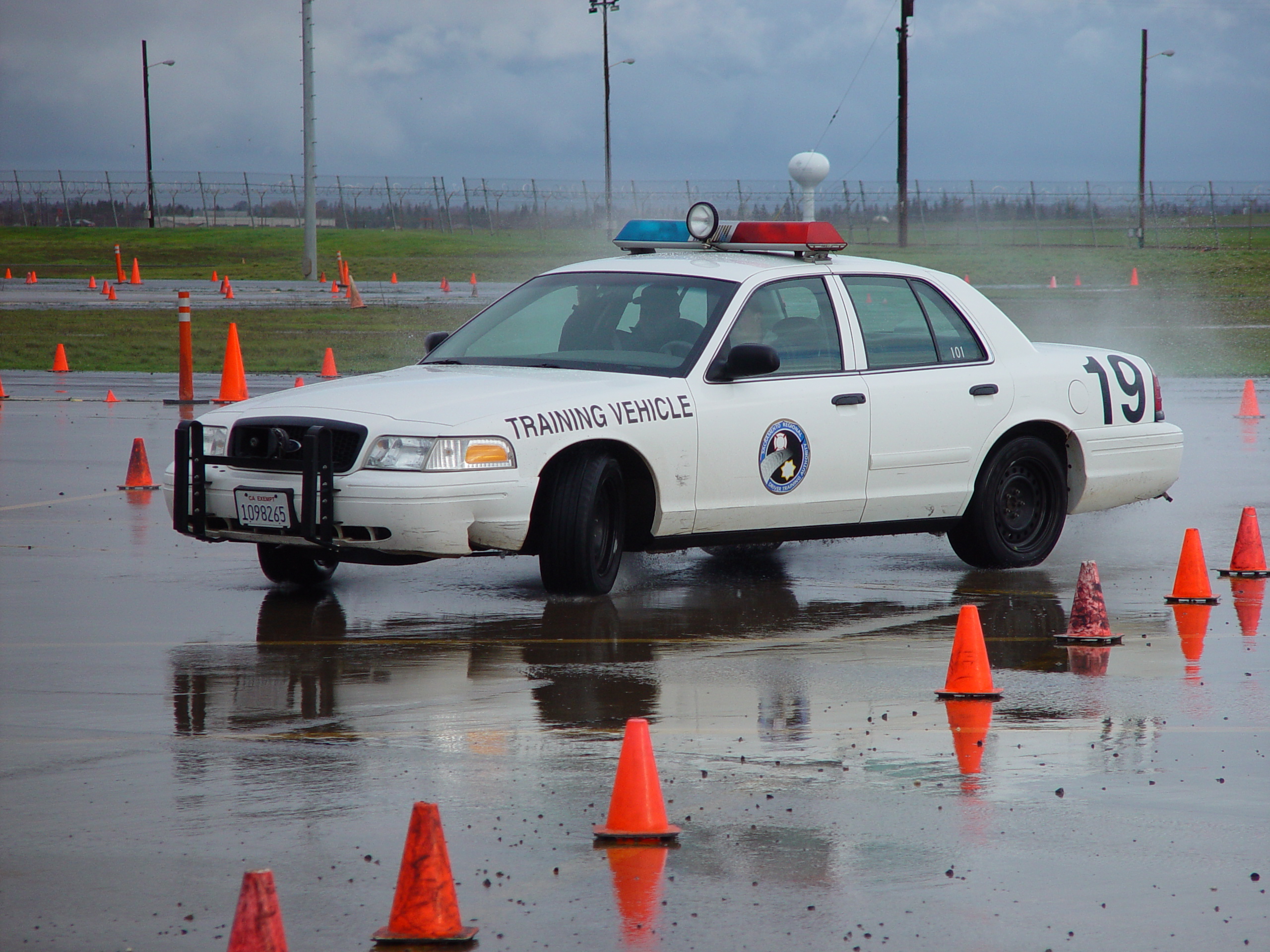 Before my department killed the bulk of its training division in 2009 due to budget cuts, we used to have an excellent EVOC (Emergency Vehicle Operations Course) program which included a full skid pan, vehicle placement area and high speed response course. I was the Sergeant in charge of EVOC, with both Academy and In-Service venues.
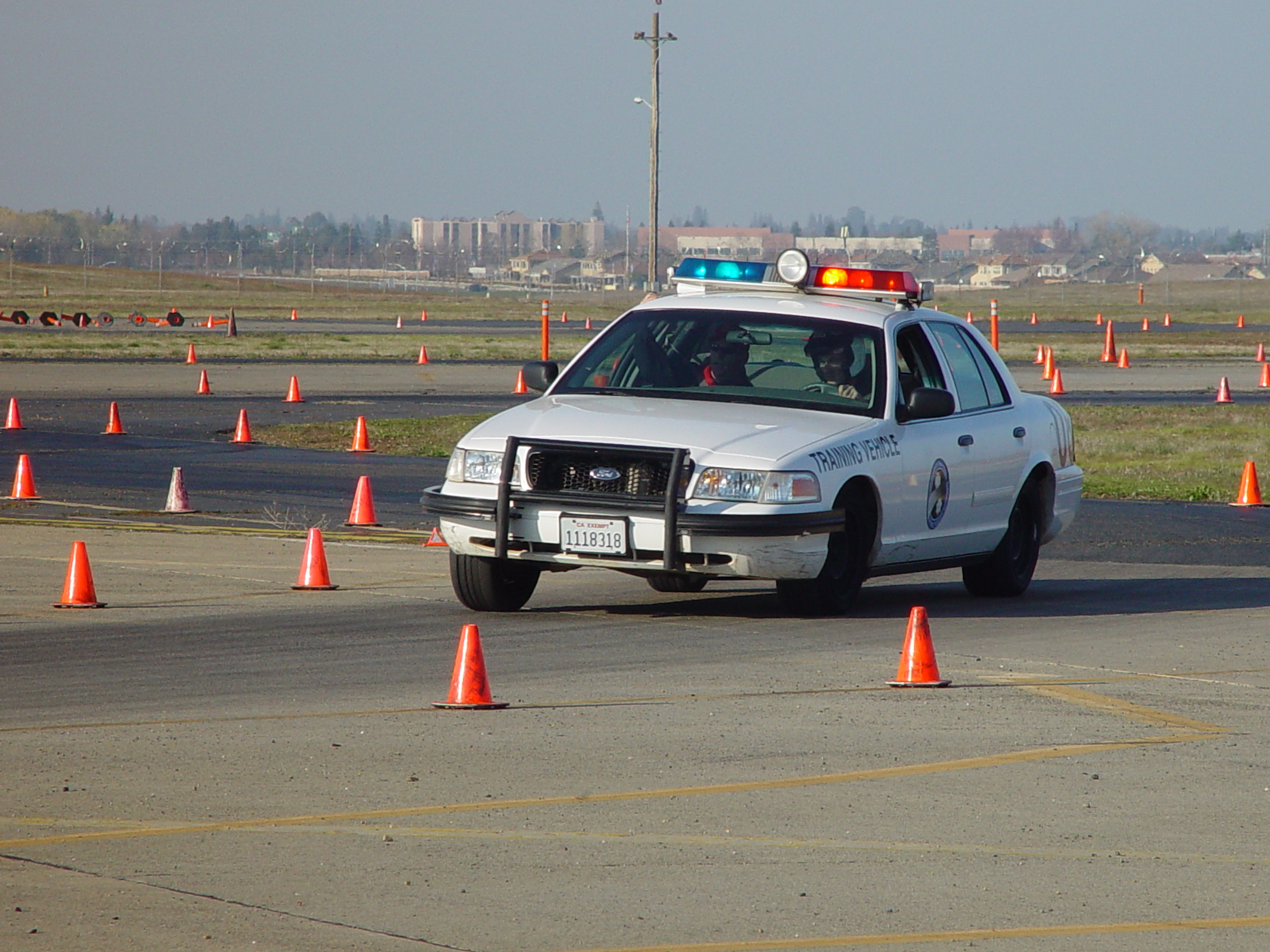 I have been teaching EVOC for emergency responders since the late 70s, and full-time from 1998 to 2009. I have trained close to 10,000 students overall in that period, at FLETC, at CHP, for the FBI and for my own department. I have published a book on same (now out of print) and may print another in the future. I wrote the entire driver’s training program for my department and for three other departments as well. I wrote a drivers training manual for convergent forces in Iraq, US and others.
That in mind, I have a few tips for persons who may decide to navigate the highways and freeways on this New Year’s Eve. With luck, you may remember them and save your life or perhaps the life of another.
1. If you don’t have to go out tonight, don’t go out tonight. Sounds like a page ripped from the notebook of Captain Obvious, but ask yourself: do you really have to go to that party tonight?
2. If you go out, don’t drink. Most parties have alternative fluids available like soft drinks, juices, non-alcoholic beverages.
3. If you drink, don’t drive. Designate a person who is the Non-Drinking Driver. Call a taxi. But don’t step into a car with alcohol in your system. One seemingly-small thing like that can change your life forever — and the lives of others.
4. If you have car trouble going home, stay far off the roadway, and away from your vehicle. Hood up, parking lights on only; no 4-way flashers. I’ll explain why later.
5. On a multi-lane highway or a freeway, stay OUT of the #1 Fast Lane. Drive in the #2 or #3 lane if available. I’ll explain why later.
6. Always make sure there is a set of tail-lights illuminated directly in front of you. And specifically if you do occupy the #1 or Fast Lane for any amount of time.
7. Stay away from The Pack. You know what I mean by The Pack — the conglomeration of cars who, for whatever reason, seem to congregate in clumps. Either stay ahead of The Pack, or behind The Pack. This is good advice at all times.
8. Stay away from those you think are drunk or impaired. You’ll likely see them, particularly tonight. Let them pass, move to another lane, even take an upcoming exit if you have to. Stay away from them. Far away. Do not follow them and stay off their bumper. If you have time and it is safe, call 911.
9. Expect that, at ANY intersection, someone — a drunk driver — will violate the red light. Particularly evident on New Years Eve, but truly applicable all the time.
10. Keep your eyes up, ahead, as far down the road as possible while you drive. This is called having a High Visual Horizon, and that small tip can literally save your life and the other occupants in your vehicle.
Now, to explain further, we’re going to examine the clotted mind of a drunk driver and relate it to the bullet points above.
First, there are Functional Alcoholics and those who are The Amateurs. You can count on New Years Eve being Amateur Night.
Functional Alcoholics are those persons — whom I’ve seen time and again — whose customary mode of operation may range up to a BAC of 2.0 or more. I once booked a man for DUI who tested at 4.0; on normal human beings that would be close to death (In Fornicalia you are considered drunk and arrestable at .08 BAC). That man spoke well and walked slowly but deliberately. He was a fully functioning alcoholic.
New Years Eve, however, will be packed with those persons who are not functional alcoholics and will not be able to perceive or understand the affect alcohol has on their ability to think rationally and make cogent decisions.
So let’s talk about the points above.
First, #4. Minimize the Flash Factor if your car is broken down on the highway or freeway. CHP has finally figured out, after years and years and years of officers killed, that the fewer lights illuminated on a traffic stop which are visible to the rear, the better. Sometimes during the day there are no lights illuminated by CHP during a traffic stop. At night, you’ll find white spotlights focused on the subject vehicle and perhaps one red lamp forward. The fewer lights visible to the rear at night, the better.
Second, #5. You will want to stay out of the #1 Fast or Left Lane because that is the lane wrong-way drunk drivers will occupy. Signs posted at wrong-way entry points to freeways are totally unseen by drunk drivers. They will migrate over to the #1 lane because, in their minds, they are now traveling in the SLOW lane and don’t want to bring attention to themselves. Their “slow lane” = your fast lane. Stay OUT of the #1 lane at night. Further, drunk drivers frequently fail to turn on their lights at all. And a “wrong-way” freeway collision always results in at least one death, because of the combined speeds involved.
Third, #6. If you happen to be in the #1 or Fast Lane and you have a set of tail-lights clearly in front of you, you know there is nothing between you and that vehicle in front. Meaning: no drunk driver is heading towards you, the wrong way. Remember: drunk drivers frequently do not turn on their vehicle lights. That said, be smart: get out of the #1 lane.
Frankly, a large percentage of CHP, state patrol and traffic-oriented law enforcement officers are injured or killed on traffic stops because they are struck from the rear by inattentive drivers or drunk drivers.
The technology utilized in cop cars now has changed markedly, even in the past five to ten years. LED light bars consume less battery power, and yet produce what I call “brain-glazing” illumination. Further, some light bars purchased by departments feature not only red and blue lights but transitioning amber patterns which move right-to-left, left-to-right, and center-to-outside.
These light bars are effective and efficient, but I submit they are also incredibly deadly at night, when drunk drivers predominantly roam. And I submit that officers who activate their full overheads at night are nothing more than enticing billboards for drunk drivers, asking “HIT ME HERE.”
Officer after officer, killed or injured because of poor vehicle placement on the final stop, poor approach tactics, massive overhead displays, lack of attention and situational awareness, or just plain damned bad luck.
And here’s why:
It gets back to what I term High Visual Horizon, or the lack thereof.
The physiological bottom line is this: eye placement = driving line. In other words, where you look is where you’re going to drive. Your brain is wired that way and, in the case of a drunk driver, their primitive impaired brain is definitely wired that way.
So when cops produce a veritable Party Array of Lights on the side of the road, many drivers will look there, particularly at night. Sober drivers will make appropriate steering corrections. Impaired drivers will not. They will steer to the point of eye placement. Which will be to the cluster of bright and brilliant lights.
Eye placement is everything. Drunk or sober.
Be safe, be smart, keep yourself alive this New Years Eve.
BZ
From the WashingtonPost.com:
by Glenn Kessler
It’s time for our annual round-up of the biggest Pinocchios of the year. This was not a presidential election year, so in some ways the subjects that needed to be fact checked were more substantive. In reviewing The Fact Checker’s more than 200 columns in the past year, we found an interesting evolution from statistics about gun violence to claims about President Obama’s health-care law. Our general rule of thumb held: the more complex a subject is, the more tempted politicians are to make misleading claims.
President Obama ended up with three of the most misleading claims of the year. But, despite the urging of some readers, his statement that “I didn’t set a red line” on Syria is not among them. We had looked closely at that claim and had determined that, in context, it was a bungled talking point, so that statement actually earned no rating.
That said:
NUMBER ONE:
This memorable promise by President Obama backfired on him when the Affordable Care Act went into effect and millions of Americans started receiving cancellation notices. As we explained, part of the reason for so many cancellations is because of an unusually early (March 23, 2010) cut-off date for grandfathering plans — and because of tight regulations written by the administration. This was our most popular fact check of the year — and Obama’s pledge also was also named PolitiFact’s “Lie of the Year.”
An insertion: if Mr Obama hadn’t insisted upon that statement again and again and again, there could have been some leeway proffered. Absent that, Mr Obama is nothing but a — wait for it — LIAR.
Pretty simple. Even journalists now realize: liar.
BZ
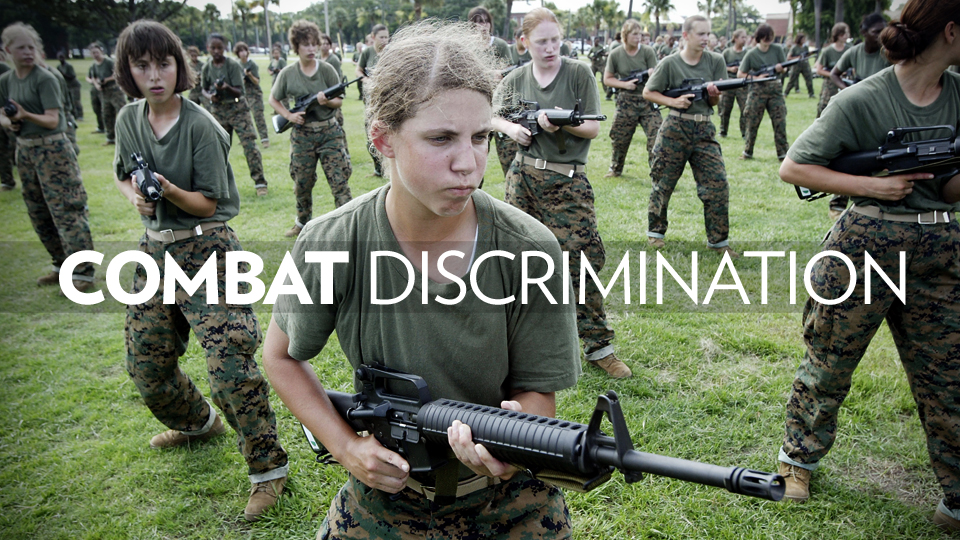 Now that’s the way to assure the survival of females in combat — since females can now serve in combat positions within the US military services.
From CNSNews.com:
by Barbara Boland
(CNSNews.com) — Females in the Marine Corps currently are not required to do pull-ups as part of their physical training, and a deadline mandating that they do at least 3 pull-ups by Jan. 1, 2014 as part of their training has been delayed for at least a year, the Corps quietly announced on social media.
Unlike their female counterparts, male Marines have long been required to do at least 3 pullups as part of the Physical Fitness Test (PFT). That’s the minimum requirement for males.
Currently, “women aren’t able to make the minimum standard of three pull-ups,” Marine spokesman Capt. Eric Flanagan told CNSNews.com. Fifty-five percent of female recruits tested at the end of boot camp were unable to do three pull-ups (1 percent of male recruits also failed).
Marine officers told NPR off-the-record that, given the three-pull-ups rule, they were afraid of losing “not only new recruits, but also current female Marines who can’t pass the test.”
Women in the Marine Corps will be allowed into ground combat in 2016. The delay in meeting men’s physical standards has raised questions about “whether women have the physical strength to handle ground combat,” reported NPR.
“‘If you can’t pull yourself up, have the decency to pull yourself out,’ Ralph Peters, a retired Army officer and military historian, told Time.com. “‘The military, despite all the post-modern technology, is still essentially physical.’”
With that in mind, I recommend the exchange between Time Magazine and retired Army Lt Col Robert Maginnis in reference to his book “Deadly Consequences: How Cowards Are Pushing Women into Combat.” It turns out he is completely correct in his fears:
Time: What’s the key thing you learned in writing Deadly Consequences: How Cowards Are Pushing Women into Combat?
P.S.
Perhaps the most insightful exchange between Time and Lt Col McGinnis? The following:
What do you think will happen, given the push to let women serve in combat, if the nation ever needs to reinstitute the draft?
Lifting all combat exclusions for women virtually guarantees that the Supreme Court will declare male-only conscription unconstitutional.
And a return to the draft is far more likely than most people realize. The unsustainably high cost of the all-volunteer force, especially with $17 trillion in national debt, and the expected requirements of future military operations will probably lead to a resumption of the draft, however politically unpopular it might be.
When that happens, women will be drafted and forced into ground combat roles.
How about it, young little urban Baby Mommas and Valley Girl chickies? Ready for your being drafted into the US military for combat?
Gird thy thongs.
 Some salient input from Grumpy Cat.
BZ