OPEC: attempting to kill US shale oil

From AP.org:

OPEC keeps oil output on hold despite low prices

by George Jahn

VIENNA (AP) — Reflecting its lessening oil clout, OPEC decided Thursday to keep its output target on hold and sit out falling crude prices that will likely spiral even lower as a result.

Oil prices fell sharply on the news. Even though the decision was largely expected, it showed the once-powerful cartel is losing the power to push up markets to its own advantage.

For the first time in years, expect even cheaper oil prices.  However:

By opposing an output cut, Saudi Arabia appears to be hoping to drive prices below the level at which shale oil production is economical. Experts say shale oil production turns too costly at the $60 a barrel level.

This is OPEC attempting to shut down oil shale production and protecting their own production interests in the Middle East.  From Bloomberg.com:

OPEC Policy Ensures U.S. Shale Crash, Russian Tycoon Says

by Will Kennedy and Jillian Ward

OPEC policy on crude production will ensure a crash in the U.S. shale industry, a Russian oil tycoon said.

The Organization of Petroleum Exporting Countries kept output targets unchanged at a meeting in Vienna today even after this year’s slump in the oil price caused by surging supply from U.S shale fields.

American producers risk becoming victims of their own success. At today’s prices of just over $70 a barrel, drilling is close to becoming unprofitable for some explorers, Leonid Fedun, vice president and board member at OAO Lukoil (LKOD), said in an interview in London.

A short-sighted administration — such as Obama’s — would and will make hay out of this news in a renewed attempt to ensure Keystone XL does not pass.  But of course this situation is no guarantor that energy prices couldn’t rise back and the nation be in another desperate situation with regard to energy, as “alternative energy” is not yet of sufficient stature to be viable and reliable.

Accounting for about a third of OPEC output, the Saudis can weather lower prices because their coffers are well-padded and its production costs are relatively low.

But poorer OPEC members like Venezuela and Nigeria need levels close to $100 or above to fund national budgets. Saudi rival Iran is suffering, too, with the price drop adding to huge revenue losses due to sanctions on its crude sales imposed over its nuclear program.

“I think you’re going to see additional tension between the OPEC ranks,” said Jamie Webster, senior director of crude oil markets at IHS consultants.

Enjoy gas prices whilst you can.

BZ


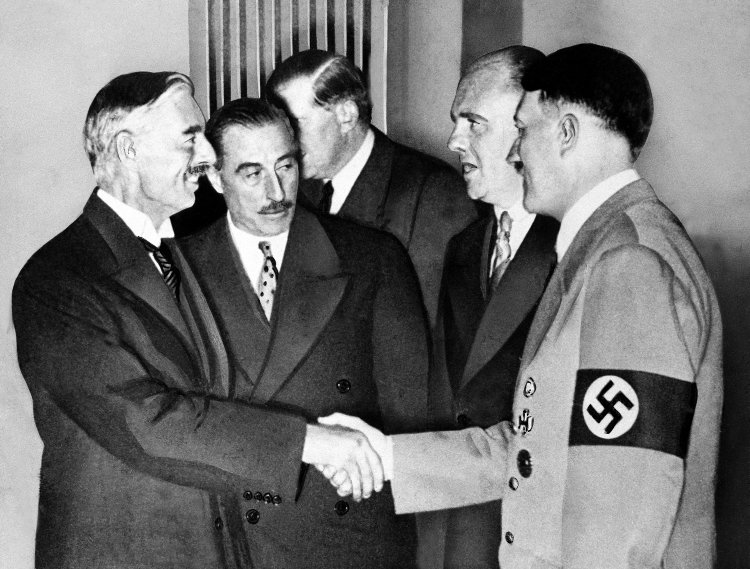
Krauthammer on the Iran agreement: “it’s the worst deal since Munich”

First, Charles Krauthammer is referring to the deal recently negotiated via SOS John Kerry and the nation-state of Iran.

Mr Krauthammer weighs in:

[TRANSCRIPT]

Charles Krauthammer:

It’s really hard to watch the President and the Secretary of State and not think how they cannot be embarrassed by this deal. Think about this. Half a dozen times, the Security Council has passed resolutions which said Iran has to stop all enrichment otherwise there will be no change in sanctions, no relief. Which means six times China and Russia — not exactly hardliners on Iran — have signed on to this.

And what is the result of this agreement? Iran retains the right to enrich. It continues to enrich during the six months. It is promised a final deal in which we’re going to work out the details of its enrichment. And remember, enrichment is the dam against all proliferation. Once a country anywhere can start to enrich there is no containing its nuclear capacity. So it undermines the entire idea of nonproliferation and it grants Iran a right it’s been lusting for for a decade. That’s why there was so much jubilation in Tehran over this.

Second, there’s a relaxation of sanctions which have really caused the Iranians to hurt, to worry about the stability of the regime, and to come and negotiate. What happens on sanctions? There’s going to be a huge infusion of cash which can reduce the inflation, can alleviate the shortages. Already the rial, the currency, jumped three percent instantly as a result of this agreement. This is a huge relief for the Iranians, and it can only increase over time. What do we get in return? I just heard the Secretary of State say we’re going to get a destruction of the 20 percent uranium. That is simply untrue.

What’s going to happen is the 20-percent enriched uranium is going to be turned into an oxide so it’s inoperative. That process is completely chemically reversible, which means Iran holds on to its 20 percent uranium and can turn it into active stuff any time it wants. This is a sham from beginning to end. It’s the worst deal since Munich.

Adolph Hitler         and     Neville ChamberlainAnd Charles Krauthammer, with whom I sometimes disagree, is completely correct in this case.  The Iranians have quantified the so-called “agreement” as not only a “win” for Iran but, now, they are saying the Spite House lied.

No precedent for that, eh wot?

From the WashingtonFreeBeacon.com:

by Adam Kredo

Iranian officials say that the White House is misleading the public about the details of an interim nuclear agreement reached over the weekend in Geneva.

Iran and Western nations including the United States came to an agreement on the framework for an interim deal late Saturday night in Geneva. The deal has yet to be implemented

The White House released a multi-page fact sheet containing details of the draft agreement shortly after the deal was announced.

However, Iranian foreign ministry official on Tuesday rejected the White House’s version of the deal as “invalid” and accused Washington of releasing a factually inaccurate primer that misleads the American public.

Translation: Iran will do what it wants when it wants and the so-called “deal” negotiated by John Frigging Kerry means less than sputum from your lungs.

One crucial question to the following paragraph:

“There’s nothing built on trust,” Kerry said on CBS’ “Face the Nation.” “We’re not sitting here pretending that Iran is going to suddenly turn over a new leaf. We have to prove it. And our structure in this agreement, I believe, will adequately prove it.”

If you don’t trust Iran, then why did you negotiate with Iran?  And, further, what is IN this deal for the United States?

Sometimes the simple questions are too obscure.

BZ