 From the Seemingly Small But Potentially Shattering Epidemiological Department:
From YahooNews.com:
By Mouctar Bah
Conakry (AFP) – Aid workers and public health officials battled Monday to contain west Africa’s first outbreak of the deadly Ebola virus as tests on suspected cases in Conakry allayed fears that it had spread to the capital.
At least 59 people have died in an outbreak of the virulent virus raging through Guinea’s southern forests but tests on three haemorrhagic fever cases — two of them fatal — in Conakry were negative, the government said.
“The Pasteur Institute in Dakar worked urgently all last night on samples taken from suspected cases here in Conakry, which were all negative,” said Sakoba Keita, the health ministry’s chief disease prevention officer.
“So for now, there’s no Ebola in Conakry, but haemorrhagic fever whose nature remains to be determined.”
If one wishes to discover how incredibly deadly and communicably-ravaging the Ebola virus can be, I highly recommend The Hot Zone by Richard Preston. Ebola has roughly a 90% fatality rate in humans.
From Wikipedia:
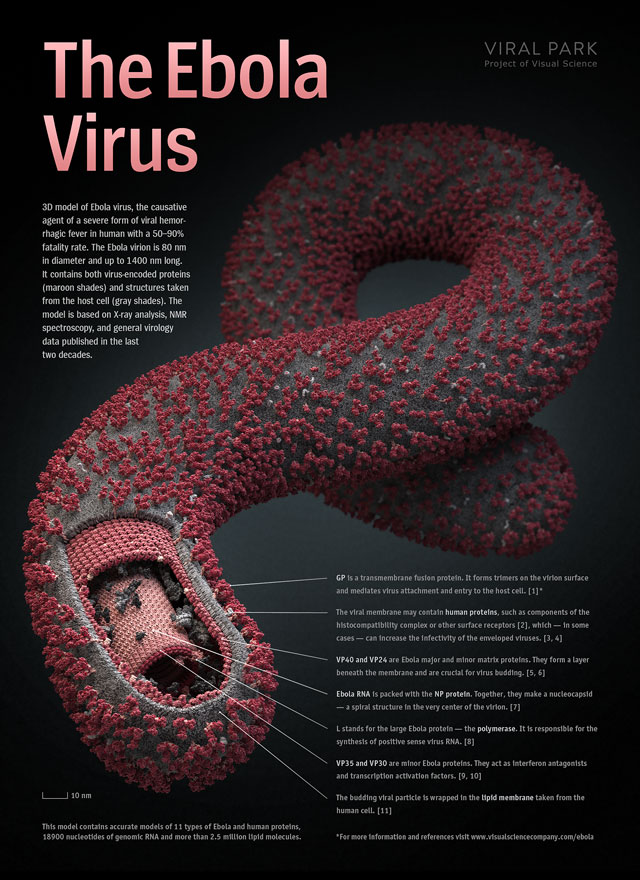
Ebola virus (EBOV) causes an extremely severe disease in humans and in nonhuman primates in the form of viral hemorrhagic fever. EBOV is a select agent, World Health Organization Risk Group 4 Pathogen (requiring Biosafety Level 4-equivalent containment), National Institutes of Health/National Institute of Allergy and Infectious Diseases Category A Priority Pathogen, Centers for Disease Control and Prevention Category A Bioterrorism Agent, and listed as a Biological Agent for Export Control by the Australia Group.
Again, from Wikipedia:
Manifestation of Ebola begins with a sudden onset of an influenza-like stage characterized by general malaise, fever with chills, arthralgia, myalgia, and chest pain. Nausea is accompanied by abdominal pain, diarrhea, and vomiting. Respiratory tract involvement is characterized by pharyngitis with sore throat, cough, dyspnea, and hiccups. The central nervous system is affected as judged by the development of severe headaches, agitation, confusion, fatigue, depression, seizures, and sometimes coma.
Cutaneous presentation may include: maculopapular rash, petechiae, purpura, ecchymoses, and hematomas (especially around needle injection sites). In general, development of hemorrhagic symptoms is indicative of a negative prognosis. However, contrary to popular belief, hemorrhage does not lead to hypovolemia and is not the cause of death (total blood loss is low except during labor). Instead, death occurs due to multiple organ dysfunction syndrome (MODS) due to fluid redistribution, hypotension, disseminated intravascular coagulation, and focal tissue necroses.
For a glimpse into the potential lethality of Ebola, see the movies Outbreak (1995), and Infection (2004).
This does not bode well, as both Ebola and Marburg are terrific killers.
BZ