 Ah yes, Leftists soon to get what they want, the censorship of those who oppose their policies?
As per normal it isn’t Republicans or Conservatives or those on the right who want to remove your freedoms and specifically your First Amendment freedoms, it is those who profess to be the most embracing and the most understanding and tolerant who wish to remove your freedoms: the Demorats and Leftists and so-called Progressives.
From the WashingtonExaminer.com:
Drudge, Fox News could be censored under new federal rules, experts warn
by Rudy Takala
A Washington, D.C., appeals court is set to hear arguments later this year on new net neutrality rules, which critics say could lead to government regulators censoring websites such as the Drudge Report and Fox News.
In its February vote on net neutrality, the Federal Communications Commission stated that broadband providers do not have a right to free speech. “Broadband providers are conduits, not speakers … the rules we adopt today are tailored to the important government interest in maintaining an open Internet as a platform for expression,” the majority held in its 3-2 vote.
The rules, which went into effect in June, require that broadband providers — such as Verizon or Comcast — offer access to all legal online content. It did not place such a requirement on “edge providers,” such as Netflix and Google. The FCC defines edge providers as “any individual or entity that provides any content, application, or service over the Internet, and any individual or entity that provides a device used for accessing any content, application, or service over the Internet.”
No right to free speech?
Writing in separate briefs, former FCC Commissioner Harold Furchtgott-Roth and the Center for Boundless Innovation in Technology argues that the rules violate the First Amendment right of Internet providers to display the speech they choose.
“If rules such as these are not reviewed under the most rigorous scrutiny possible, government favoritism and censorship masquerading as ‘neutrality’ will soon cascade to other forms of mass communication,” the center argues.
“If the court upholds the FCC’s rules, the agency’s authority over the Internet would extend from one end to the other,” Fred Campbell, president of the Center for Boundless Innovation in Technology, told the Washington Examiner. “Because the same theories the FCC relied on to impose its new regulations on Internet service providers are also applicable to companies like Apple and Netflix, the FCC could extend its regulatory reach much further in the future.”
Could that “reach” mean me? And you? Our opinions on social media? Any bit of written expression that involves an opinion or even a viewpoint?
More pointedly, our political opinions? Opinions that could contradict those of the regime in power, as Mr Obama or others of power in DC?
Specifically, Campbell said, the FCC will likely try to control political speech.
“This possibility raises the risk that Congress or the FCC could impose restrictions on Internet video and other services that have traditionally been imposed on over the air broadcasting and cable television, including the fairness doctrine that once put the government in charge of determining whether broadcasters were fairly representing both sides of an issue,” he explained.
FCC Commissioner Ajit Pai, who voted against the net neutrality rules, has said such restrictions may be coming if net neutrality is allowed to stand, warning in March that online political content like the Drudge Report could face greater regulation.
Why is it, however, that only Drudge and Fox News should be targeted? Is it because the “rest” of the news agencies are so terribly unbiased — such as NBC, CBS, ABC and CNN? It is no shock that there is much Left-wing bias in the newsrooms of what most would term the “mainstream media.” Bernard Goldberg knew this years ago. There are very few Republicans and right-wingers in MSM newsrooms.
Further, clearly the ignorant don’t know that Drudge doesn’t write news; the DrudgeReport is nothing more than a news aggregator. It collects and collates news from sources around the globe, then slugs stories with a headline that catches.
Is this really the United States of America, when something like this could actually happen?
BZ

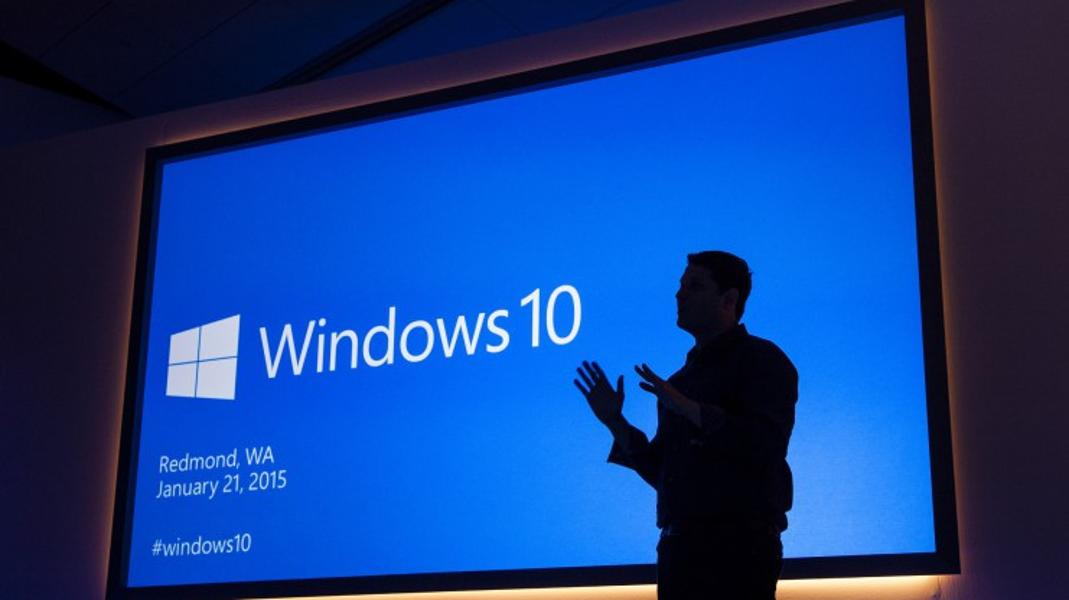 After this post, many persons were kind enough to comment on my question: what do you think of Windows 10?




I’m going to break with some of the comments above.
Keep in mind that I only ran Windows as a primary platform at home briefly in 1995, and then on a work machine from 1998-2000. I have set up and supported machines for friends, families and clients, but my platform of choice has been Linux for the past twenty years.
That said, I have been using Windows 10 in a virtual machine on my desktop for several weeks, as well as on a phone for the past week. Additionally, I upgraded my mother’s tablet from 8.1 to 10 this past weekend.
My initial impressions are generally positive. I maintain that 8.1 was actually a decent platform for touch-enabled devices (especially tablets), but it definitely had severe short-comings as a desktop operating system. Invoking controls that were hidden as a sop to mobile devices with smaller screens was cumbersome and unintuitive with a mouse.
They have largely addresses these concerns. Most common control panel functionality has been subsumed into the new Settings app (with obvious links back to the more comprehensive control panel for advanced or esoteric settings). Metro apps are no longer forced full screen on the desktop, so you don’t get the absurdity of an app designed with 5″ screens in mind taking up a 27″ monitor. Continuum and universal apps promise a far more harmonious and integrated experience than the jarring and sometimes confusing divide between the metro and desktop modes of Windows 8*.
* Whether that promise is delivered depends somewhat on adoption and transition, but at least the platform has moved in the right direction. And it is somewhat academic for a dedicated desktop device, since it will never need to be in tablet mode.
There are certainly some privacy concerns, but that is true with every vendor. Windows 10 tracks no more information than Google does on Android and Chrome, for example, and they are surprisingly transparent about what is being collected and provide straightforward ways of disabling it. This is a fairly good article on the subject:
http://www.windowscentral.com/all-you-need-know-privacy-windows-10
And it is true there is some functionality that has been phased out of the Windows release. Windows Media Center was already deprecated by the time Windows 8 came out, though there was enough lingering demand at that point that they released an expansion pack. If you are upgrading from Windows 7 or a Windows 8 edition that contained those features, you will get the new DVD player app for free. Otherwise they offer it as a $15 add-on, but I would recommend downloading the excellent (and free) VLC application instead.
They also removed the Solitaire games from the distribution, but similar apps are available free as downloads from the Microsoft Store as “Microsoft Solitaire Collection” and “Microsoft Minesweeper”.
Microsoft has also been transparent on these changes, listing removed and change features right in the specifications:
http://www.microsoft.com/en-gb/windows/Windows-10-specifications#featdep
Personally, if I were running an earlier release on my “daily driver” and was happy with the experience, I would hold off. But if I were buying a new machine, I would definitely go with Windows 10. At minimum it is a significant improvement of Windows 8/8.1 and Windows 7 already fell out of mainstream support in January. They are offering extended support through 2020, so it will run on existing hardware and get security fixes, but may suffer in terms of new hardware support and bug fixes.
Ideally, if you have a working machine that is powerful enough, I would install Windows 10 in a virtual machine to play with long enough to get a feel for it. Or maybe head to the Microsoft Store (if you have one near by) and play with a machine there for a while. That has the advantage of giving you a chance to ask the associates any questions you have about new features or behaviour.